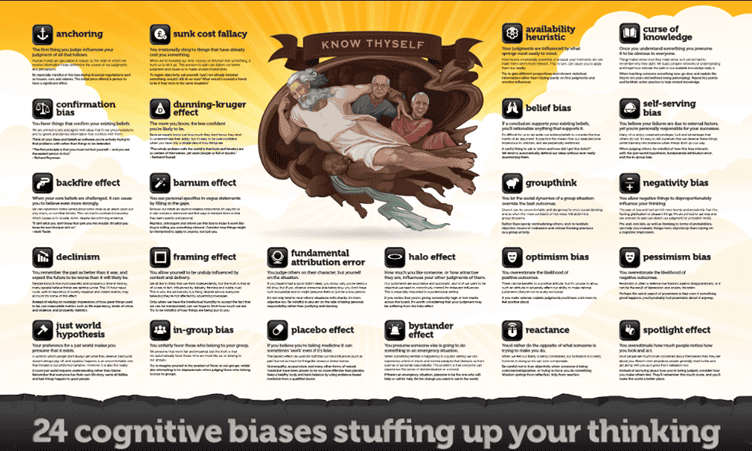
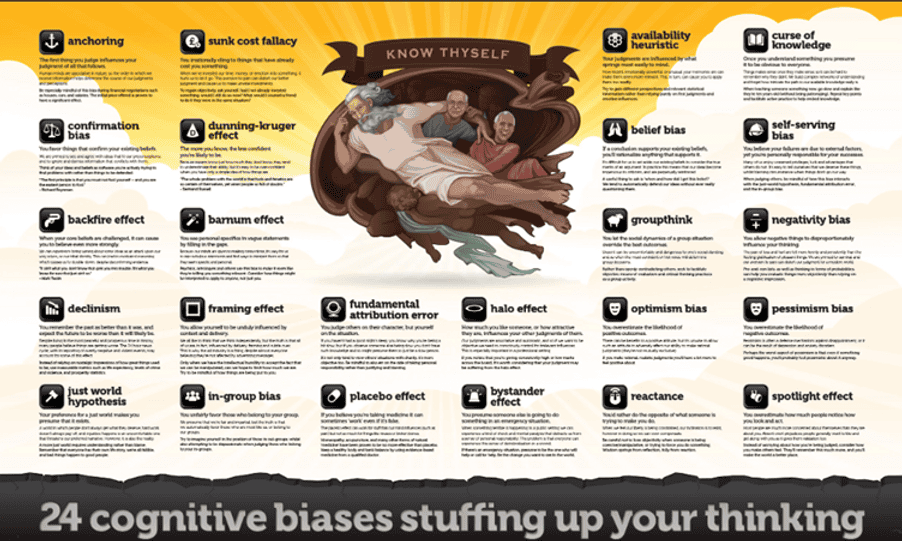
The proliferation of biases and fallacies masks the truth i.e. that human behaviour is fluid and blurry. The use of labels implies a rigour that does not exist. As financial planners using these labels for certain investors, we risk creating stereotypes i.e. the idea that when a particular identity treat (race, gender, in this case DIY investor) of a particular person is emphasised, a stereotypical notion (in this case mental ability) is reinforced on the subject.
Aside from the proliferation and replication of problems, a further consequence of overemphasising biases, in fact very concerning, is starting to emerge i.e. ill-informed and failing interventions. This is what I have written this article. I have just taken a new client who had a dividend paying portfolio which he thought it was cautious, being moved by a financial planner into a 40% / 60% portfolio in 2021 and who lost a lot of money, when instead he would have been OK if left to his own devices.
Armed with a sparkling new vocabulary of cognitive and behavioural effects made to impress clients and prospects, explaining that it is easy to see examples of biases all around us, we could fool ourselves into believing that we have become experts. We risk failing prey to confirmation biases ourselves, and to miss the full picture.
Using humility is a better way, I have examples of Dimensional clients who were told in 2007 that “science has said this is what happens”, and before they knew it a few of those advisors saw some customers walking away in 2008/09. Oversimplification and overgeneralisation will obscure the actual complexity of human behaviour. A particular behaviour is rare to be a pure example of a specific cognitive effect. In most cases, there is a combination of multiple simultaneous effects in way that are not immediately obvious.
I am not against passive investing. However, taken to the extreme, this would mean no new businesses will be started, and no stock price discovery would be available, leading to the disappearance of equity premia, and as a result no more investors. It would not happen because active investing will remain, people will start businesses, and security analysis will continue to look for undervalued companies.
From our part we will continue to use factor and active investing in our investment proposition, paying attention to the passive benchmarks to not underperform after fees.
Disclaimer: This article provides general information and does not constitute financial advice. Always consult a qualified financial professional before making investment decisions. your investments will go up and down and you may receive back less than you put in.