Capital allocation is a topic of huge importance, and we believe we need to remain rational (especially now) and use clear thinking for every decision we make.
Last week, Goldman Sachs forecast was for 2 million more unemployment claims in the U.S., the situation was a lot worse, we had in 3 million new unemployment claims last week.
This week the U.S. Congress approved the $2.2 trillion coronavirus rescue package. There is a lot of good in this package and it will ameliorate some of the harm. But we do not think it can entirely cushion an economy from a self-sustained shutdown, which is what we are in right now. At some time, we will have to open the economy again, that is the only way to keep things going.
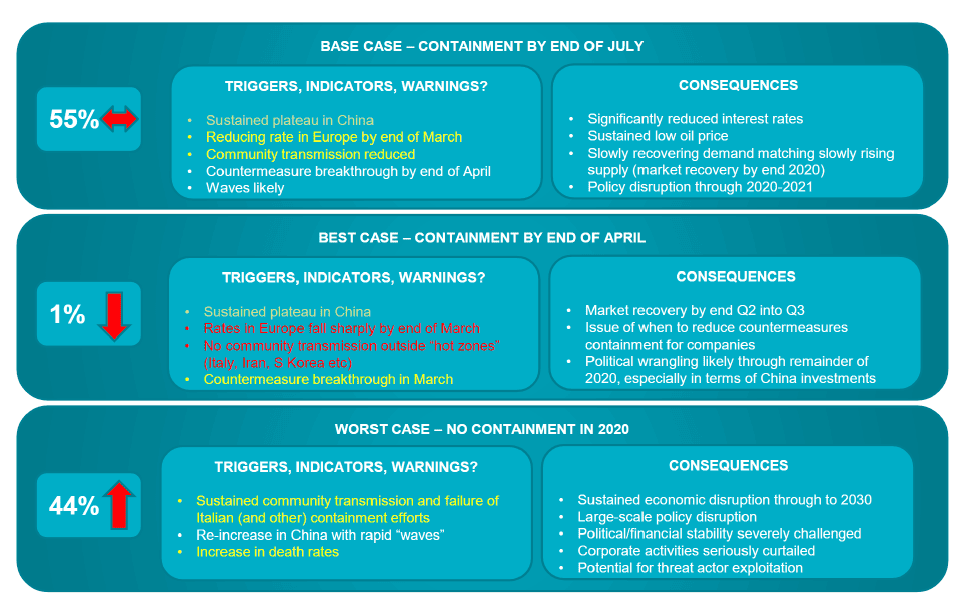
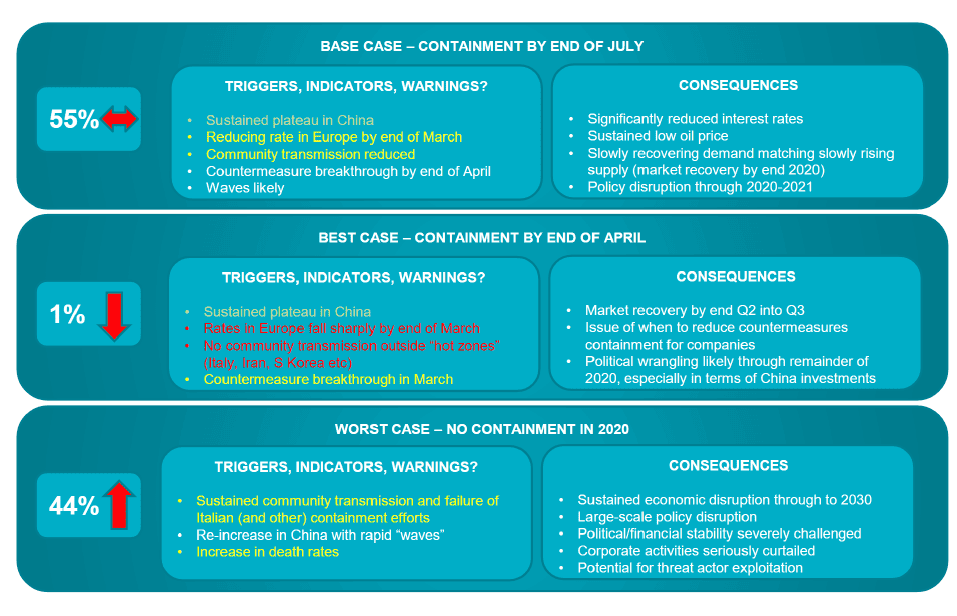
We read the Sibylline report which uses three scenarios, although there are two main ones left: ‘containment by end of July’ and ‘no containment in 2020’. Sibylline attaches a 55% probability for the first, and 44% for the later.
It is very difficult to forecast what stock markets would do, especially that it is also possible that future stimulus packages may be agreed in the U.S., and in Europe.
In the meantime, we are going to enter April soon, and firms will have to communicate their earnings for the first quarter. My expectation is that some of the numbers would not be pretty, and markets will correct further, something like another 10% – 15%. In case we cannot achieve containment in the summer, we can expect a higher correction, like 50% – 55% drop based on the peak on 20 February. This will equalise the drop we had in the Global Financial crisis.
The expectation is the first case is for a “U” recovery, when in the worst-case scenario, the expectation is for an “L” recovery. I would caution that even in the case of a “U” recovery it may take another two years before earnings for companies will normalise and we can reach again the peak from 20 February 2020. In case containment is not achieved by July, an L-shape recovery profile could be possible, and this could stretch as far as 2022, and have impacts lasting as far as the next decade.
From our part, we continue to carry higher cash allocations (10% – 15%), very little allocation to investment grade bonds, no high yield (junk) bonds allocation, no commodities, and no commercial property and REITs.
For the stable part of our clients’ portfolios we prefer cash, short and medium duration UK Gilts and U.S. (unhedged) Treasuries. Within our equity allocation, we continue to stay invested in high quality companies, and have no allocation to banks, airlines, oil producers, energy and mining companies, insurers, or hotels and restaurant sector. We intend to deploy some (or all) of the cash in April once we have some more clarity on the company earnings.
In conclusion, when investing, we will continue to do what we have always done, invest in quality companies or in the words of Warren Buffett ‘we do not leap seven feet fences, instead we look for one-foot fences with big rewards on the other side.’ Quality companies offer just that.
Note: Capital is at risk when investing and you could get back less than you put in.